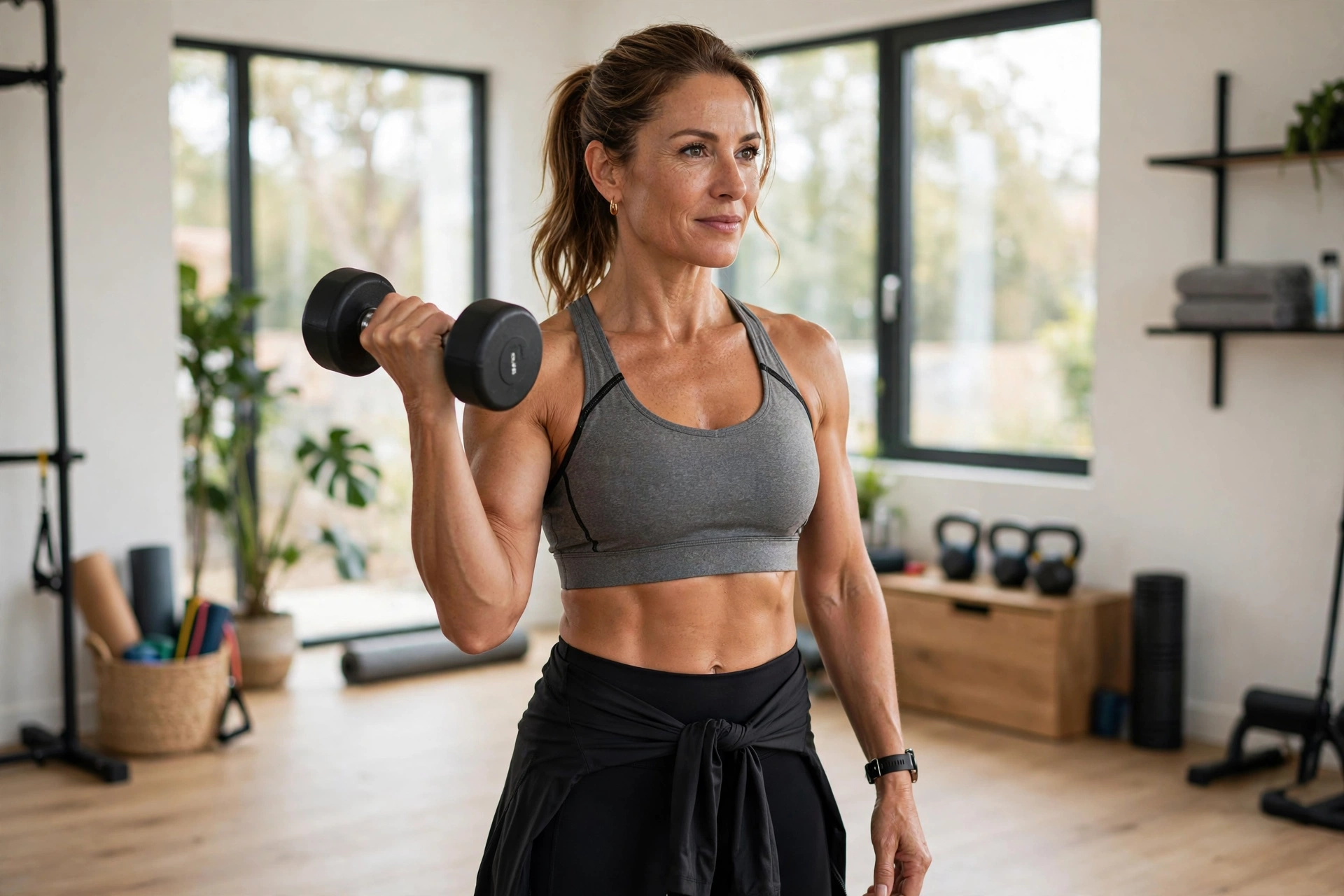
Turning 40 doesn’t mean slowing down — it means training smarter. Strength training for women over 40 is one of the most powerful things you can do for your body, from protecting your bones to boosting your metabolism and confidence. Yet many women avoid the weights section, unsure where to start.
This guide breaks it all down: why it matters, the best exercises, a simple weekly plan, and safety tips — no gym intimidation required.
Why Strength Training Matters More After 40
After age 30, women lose an average of 3–8% of muscle mass per decade, a process called sarcopenia. This decline often speeds up during the perimenopause transition, when falling estrogen combines with becoming less active — and the same hormonal shift is linked to bone density decline, a slower metabolism, and increased belly fat.
Strength training directly fights all of these. It rebuilds muscle, strengthens bones, improves balance, and may also support better sleep and mood. It’s not about looking a certain way — it’s about staying strong, independent, and energized for decades to come.
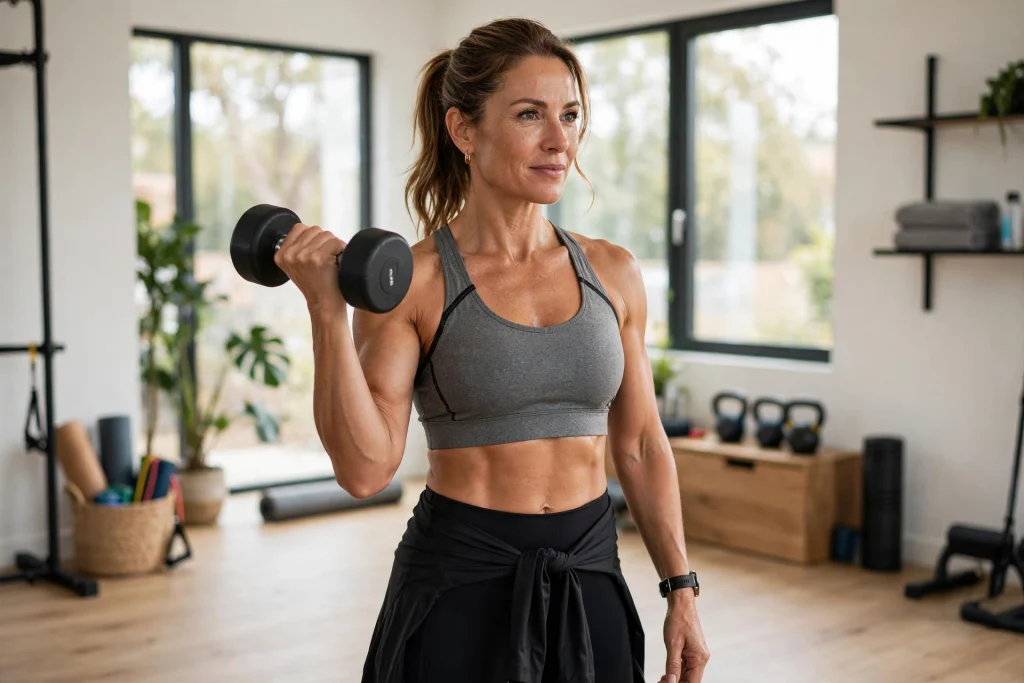
7 Science-Backed Benefits of Lifting Weights After 40
- Builds and preserves muscle mass — counteracts age-related muscle loss
- Strengthens bones — reduces osteoporosis and fracture risk
- Boosts metabolism — muscle burns more calories at rest than fat
- Improves balance and coordination — lowers fall risk
- Supports joint health — stronger muscles protect knees, hips, and back
- Enhances mood and sleep — reduces anxiety and improves sleep quality
- Increases confidence — feeling strong changes how you carry yourself
How to Get Started: The Basics
You don’t need a gym membership or heavy barbells to begin. Here’s the simple formula:
- Frequency: 2–3 sessions per week, with at least one rest day between sessions
- Equipment: A pair of light-to-medium dumbbells (3–8 kg), resistance bands, and your body weight are enough to start
- Structure: 6–8 exercises per session, 2–3 sets of 10–12 reps each
- Warm-up: Always spend 5 minutes on light cardio and dynamic stretches first
- Progression: When 12 reps feel easy, increase the weight slightly — this is how muscles grow
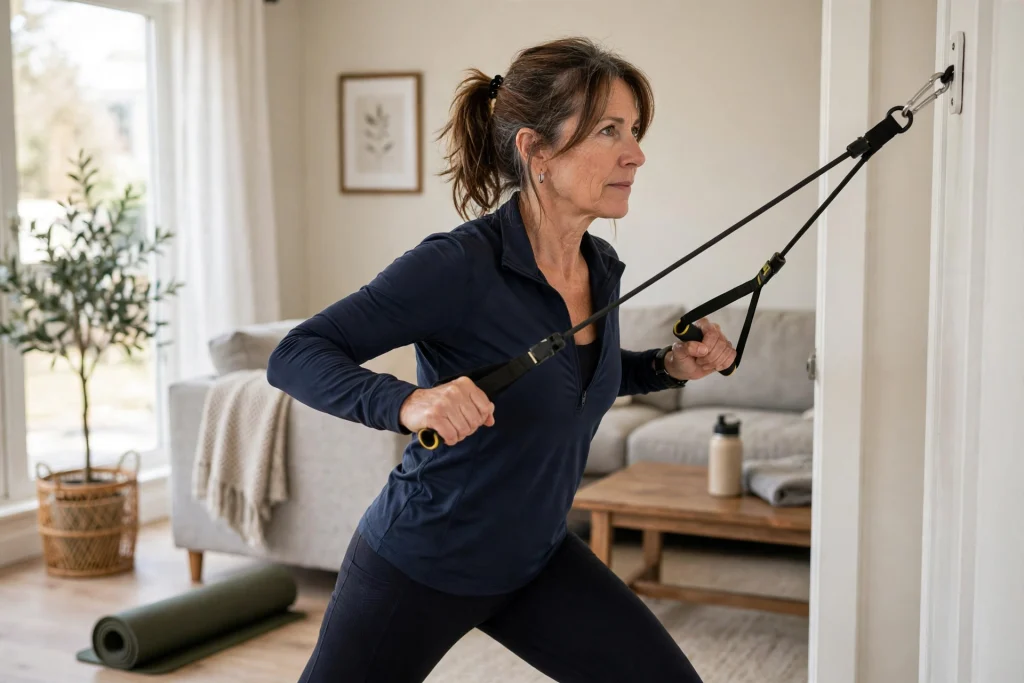
The 8 Best Strength Exercises for Women Over 40
These compound movements work multiple muscle groups at once, giving you maximum results in minimum time:
- Goblet Squats — Hold a dumbbell or kettlebell at your chest and squat. Builds legs, glutes, and core.
- Dumbbell Rows — Bend over a bench and row one dumbbell at a time. Strengthens the back and improves posture.
- Glute Bridges — Lie on your back, feet flat, and lift your hips. Activates glutes and protects the lower back.
- Push-Ups (knees or wall to start) — The ultimate upper-body builder for chest, shoulders, and arms.
- Dumbbell Shoulder Press — Press weights overhead while seated or standing. Builds strong, defined shoulders.
- Deadlifts (light dumbbells) — Hinge at the hips with a flat back. The king of full-body strength.
- Resistance Band Pull-Aparts — Hold a band at chest height and pull apart. Excellent for posture and shoulder health.
- Plank Hold — Hold for 20–60 seconds. Builds deep core stability that protects your spine.
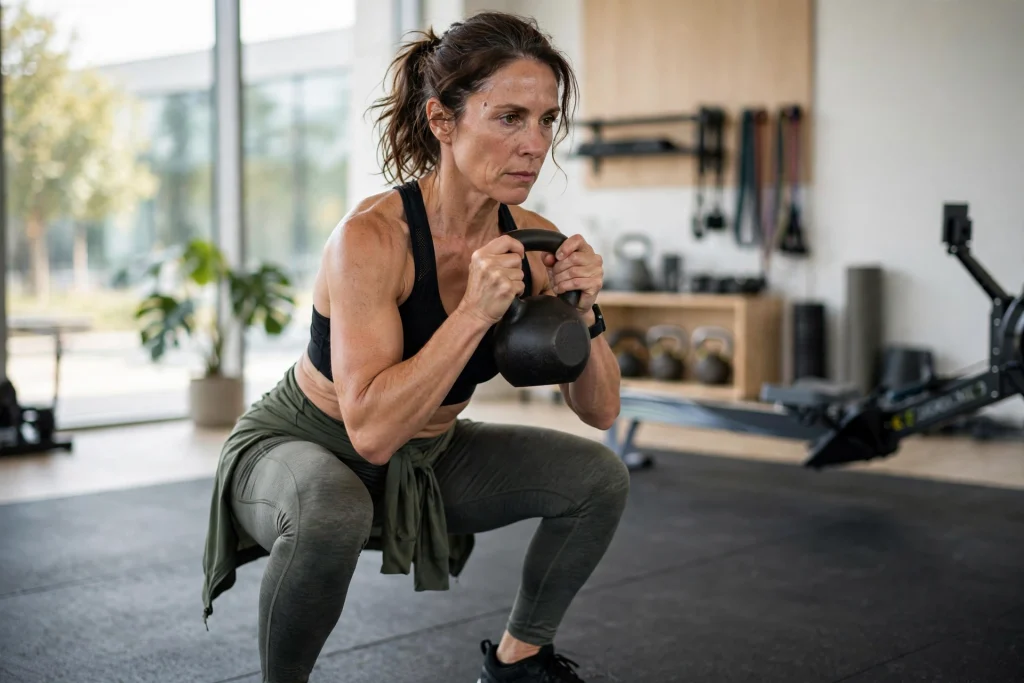
Sample Weekly Plan for Beginners
Day 1 — Full Body A:
Goblet squats, push-ups, dumbbell rows, glute bridges, plank (20 sec × 3)
Day 2 — Rest or light walk
Day 3 — Full Body B:
Deadlifts, shoulder press, resistance band pull-aparts, lunges, plank (30 sec × 3)
Day 4 — Rest or yoga/stretching
Day 5 — Full Body A (repeat, slightly heavier)
Days 6–7 — Rest, walk, or gentle activity
Stick with this for 4–6 weeks before adding complexity. Consistency beats intensity every time.
Safety Tips: Train Smart, Not Just Hard
- Master form first — watch tutorials or book one session with a trainer to learn proper technique
- Never skip the warm-up — cold muscles are injury-prone muscles
- Listen to your body — sharp pain means stop; muscle fatigue is normal, joint pain is not
- Rest between sets — 60–90 seconds is ideal for beginners
- Stay hydrated and avoid training on an empty stomach
- Talk to your doctor first if you have osteoporosis, high blood pressure, or joint issues
Fuel Your Training: Nutrition Tips
Strength training breaks muscle down; nutrition builds it back up. Aim for:
- Protein: 1.2–1.6 g per kg of body weight daily (eggs, chicken, fish, Greek yogurt, lentils) — an evidence-informed range for active adults over 40; spread it across 3–4 meals
- Calcium + Vitamin D: Essential for bone strength — dairy, leafy greens, and sunlight
- Post-workout meal: Aim for protein and carbs within a couple of hours of training — a sensible habit, though research shows your total protein intake across the whole day matters more than exact timing
- Hydration: At least 2 liters of water daily, more on training days
Frequently Asked Questions
Will lifting weights make me bulky?
No. Women have much lower testosterone than men, so building large muscles is very difficult. You’ll get toned, defined, and strong — not bulky.
How long before I see results?
Most women notice improved strength within 3–4 weeks (largely from the nervous system learning the movements) and visible muscle changes in 8–12 weeks with consistent training.
Is it safe to start strength training at 45, 50, or 60?
Absolutely — it’s never too late. Studies show women in their 60s, 70s, and beyond build significant strength. Just start light and progress gradually.
Can I do this at home without a gym?
Yes! Dumbbells, resistance bands, and bodyweight exercises are more than enough for an effective program.
How is strength training different from cardio?
Cardio burns calories during the workout; strength training builds muscle that burns calories all day long. The best routine includes both.
The Bottom Line
Strength training for women over 40 isn’t optional — it’s essential. It protects your bones, revs your metabolism, improves your balance, and builds the kind of confidence that shows in everything you do.
Start light, stay consistent, and give yourself grace. The strongest woman in the room is the one who showed up. Your future self will thank you — now pick up those dumbbells and begin.