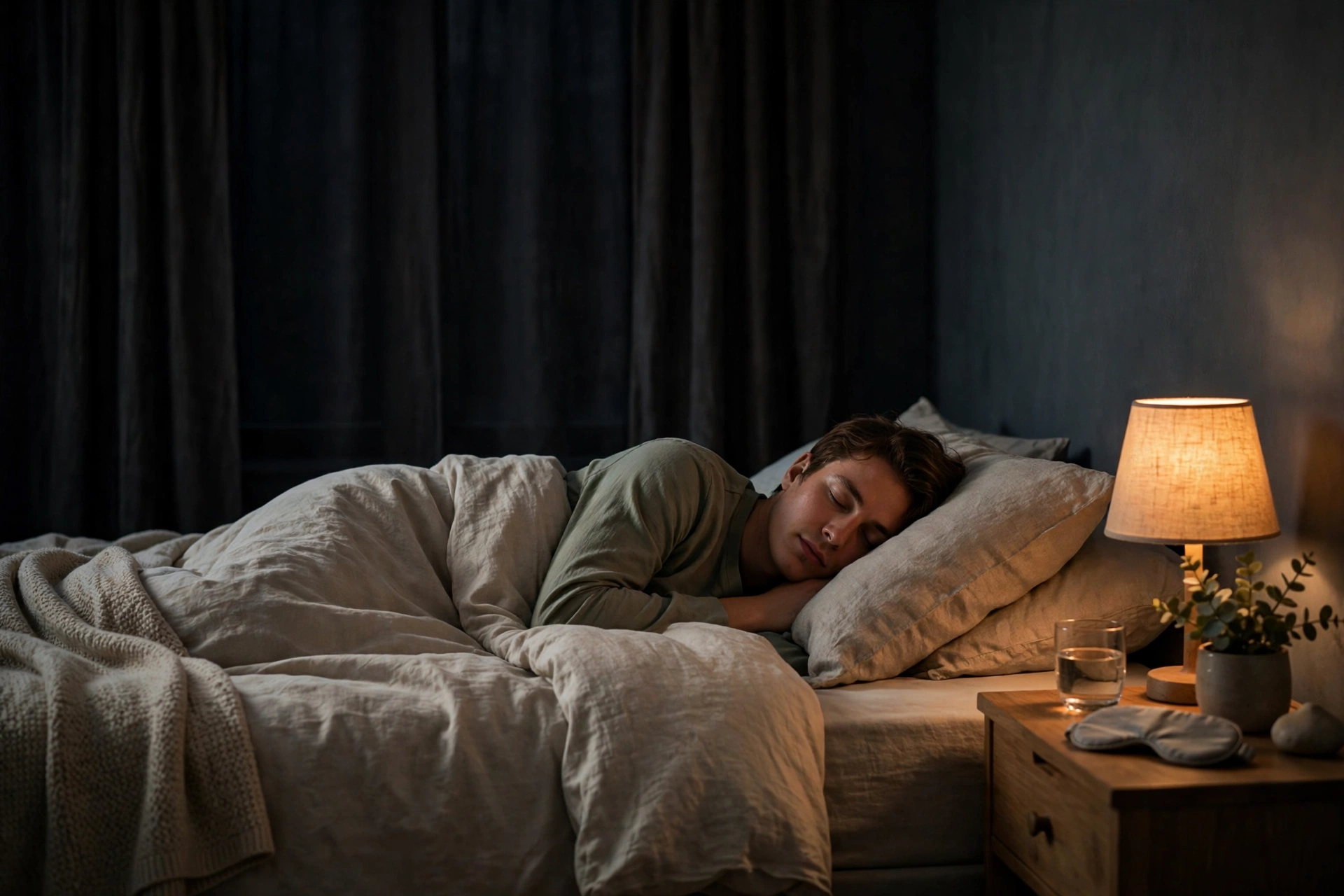

Tossing and turning at 2 AM, staring at the ceiling while your mind replays the day — if this sounds familiar, you’re not alone. An estimated 1 in 3 adults don’t get enough sleep, and poor sleep is linked to everything from low energy and poor focus to weakened immunity and weight gain.
The good news? You don’t necessarily need sleep aids. Sleep hygiene tips for better sleep — simple, consistent habits around your sleep environment and daily routine — are among the most effective tools for improving sleep quality. Here are 10 backed by sleep science.
1. Keep a Consistent Sleep Schedule
Your body runs on a circadian rhythm — an internal clock that thrives on routine. Going to bed and waking up at the same time every day, including weekends, is the single most impactful sleep hygiene habit.
Yes, even on weekends. Sleeping in by more than an hour can shift your rhythm and make Monday mornings miserable — a phenomenon sleep researchers call “social jet lag.” If you need to adjust your schedule, shift it gradually by 15–30 minutes per night.
2. Create a Wind-Down Routine
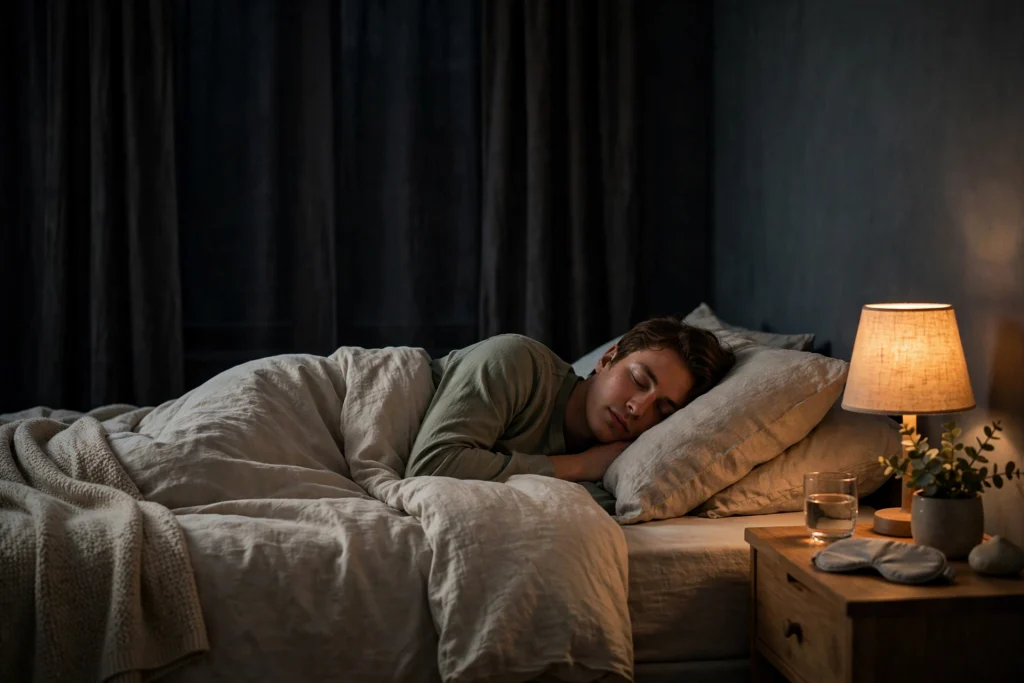
You can’t go from full-speed to sleep in five minutes. Your brain needs a transition. Build a 30–60 minute wind-down routine that signals it’s time to rest:
- Take a warm bath or shower (the drop in body temperature afterward promotes sleepiness)
- Read a physical book or magazine
- Do gentle stretching or light yoga
- Sip a caffeine-free herbal tea like chamomile
- Practice deep breathing or meditation
The key is consistency — repeat the same calming sequence each night so your body learns the cues.

3. Put Screens Away Before Bed
The blue light from phones, tablets, and laptops suppresses melatonin — the hormone that tells your body it’s nighttime. Beyond the light, the content itself (news, social media, work emails) keeps your mind alert and anxious.
Aim to put screens away 30–60 minutes before bed. If that’s unrealistic, at minimum:
- Use night mode / blue light filters in the evening
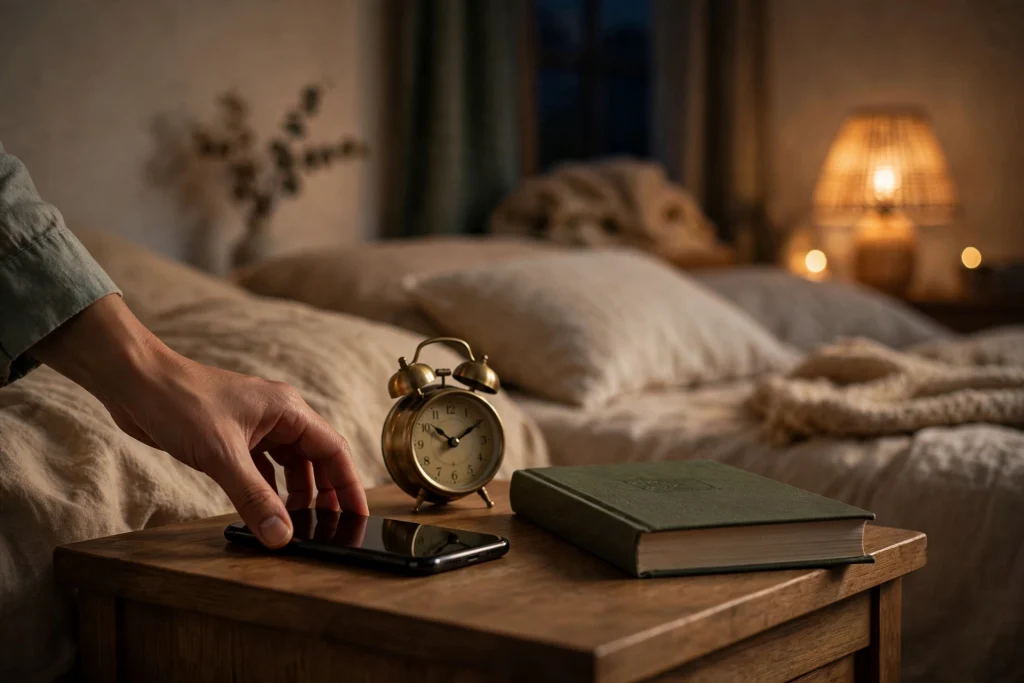
- Keep your phone face-down or in another room
- Use a traditional alarm clock instead of your phone
4. Make Your Bedroom a Sleep Sanctuary
Your sleep environment matters more than you think. Optimize it for darkness, quiet, and coolness:
- Dark: Use blackout curtains or a sleep mask — even small amounts of light can disrupt sleep
- Quiet: Try earplugs or a white noise machine if noise is an issue
- Cool: The ideal bedroom temperature is around 18–20°C (65–68°F); your body needs to cool down to fall asleep
- Comfortable: Invest in a supportive mattress and pillows that suit your sleep position
- Clutter-free: A tidy room promotes a calmer mind
Reserve your bed for sleep (and intimacy) only — working or scrolling in bed trains your brain to associate it with wakefulness.
5. Get Morning Sunlight
This one surprises people: better sleep starts in the morning. Exposure to bright natural light within an hour of waking helps set your circadian clock, making you more alert during the day and sleepier at night.
Aim for 10–30 minutes of daylight in the morning — a walk, breakfast by a window, or just stepping outside. On dark winter mornings, a light therapy lamp can help.
6. Watch Your Caffeine Timing
Caffeine has a half-life of about 5–6 hours, meaning half of your afternoon coffee is still in your system at bedtime. Even if you can fall asleep after an evening espresso, research shows caffeine reduces deep sleep quality.
The rule of thumb: no caffeine after noon (or at least 8 hours before bed). Remember that tea, chocolate, energy drinks, and some medications also contain caffeine.
7. Be Careful With Alcohol and Heavy Meals
Alcohol may make you drowsy, but it fragments sleep — causing more awakenings in the second half of the night and suppressing restorative REM sleep. A nightcap is not a sleep aid.
Similarly, avoid large, heavy, or spicy meals within 2–3 hours of bed. If you’re hungry, a light snack with protein and complex carbs (like a banana with peanut butter or warm milk with oats) is fine.
8. Exercise Regularly — But Time It Right
Regular physical activity is one of the best things you can do for sleep. Studies consistently show that people who exercise fall asleep faster and enjoy deeper sleep.
The timing matters, though: finish vigorous exercise at least 2–3 hours before bed, as the stimulating effects and elevated body temperature can delay sleep. Gentle evening activities like walking, stretching, or yoga are perfectly fine.
9. Manage Stress and Racing Thoughts
Lying awake with a racing mind is one of the most common sleep complaints. If worries keep you up:
- Journal before bed — write down tomorrow’s tasks so your brain can let go
- Try the 4-7-8 breathing technique — inhale 4 seconds, hold 7, exhale 8
- Use progressive muscle relaxation — tense and release each muscle group from toes to head
- Get up if you can’t sleep — if you’re awake for more than 20 minutes, move to another room, do something calm in dim light, and return when drowsy

10. Limit Naps (Or Nap Smart)
Long or late naps can steal sleepiness from nighttime. If you nap:
- Keep it to 20–30 minutes
- Nap before 3 PM
- If you consistently need long naps, it may be a sign you’re not sleeping well at night — focus on fixing that first
When to See a Doctor
Good sleep hygiene solves many sleep problems, but not all. Seek professional help if you experience:
- Insomnia lasting more than 3 weeks despite good habits
- Loud snoring, gasping, or pauses in breathing during sleep
- Excessive daytime sleepiness that affects work or driving
- Restless legs or unusual movements at night
- Reliance on sleep aids to fall asleep every night
Frequently Asked Questions
How long does it take for sleep hygiene to work?
Many people notice improvement within a few days of consistent habits, though it can take 2–4 weeks for your body clock to fully adjust. Consistency matters more than perfection.
What is the 10-3-2-1 sleep rule?
A popular framework: no caffeine 10 hours before bed, no food or alcohol 3 hours before, no work 2 hours before, no screens 1 hour before, and 0 snoozes in the morning. It’s a helpful memory aid, though the exact numbers are guidelines rather than strict science.
Is it bad to use my phone as an alarm?
It’s not the alarm function that’s the problem — it’s the temptation to scroll. If you can resist, it’s fine. If not, a cheap alarm clock removes the temptation entirely.
Does warm milk really help you sleep?
Warm milk contains small amounts of tryptophan, but the effect is likely more about the comforting bedtime ritual than the chemistry. A warm, caffeine-free drink as part of your wind-down routine is a perfectly good habit.
Can I catch up on sleep on weekends?
Partially — you can repay some sleep debt, but irregular schedules disrupt your circadian rhythm. It’s better to keep consistent times and aim for 7–9 hours nightly.
The Bottom Line
Sleep hygiene tips for better sleep aren’t complicated — they’re small, consistent habits that work with your body’s natural rhythms instead of against them. Start with two or three changes that feel easiest, build the routine over a few weeks, and pay attention to how much better your days feel.
Good sleep isn’t a luxury. It’s the foundation everything else is built on — energy, mood, focus, health. Tonight, put the phone down a little earlier. Your tomorrow self will thank you.