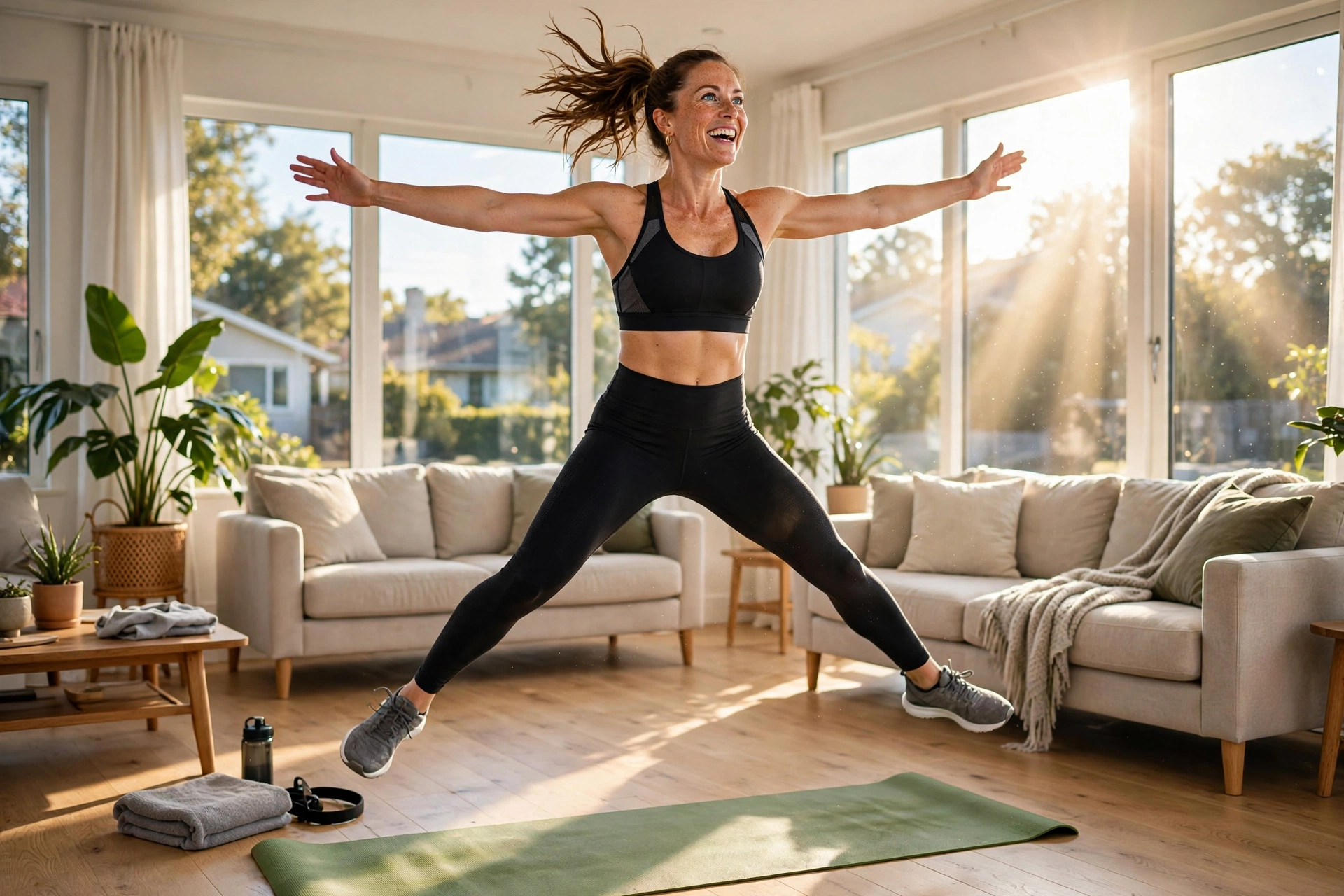
Do you often feel drained by the end of a long day? Finding time to hit the gym can be a challenge, but staying active is essential for your vitality. A 20minute home workout no equipment routine offers the perfect solution to help you move, build strength, and feel refreshed.
This guide is designed as an ideal home workout for busy individuals who need an efficient way to exercise without relying on heavy machines or weights. You can easily fit this session into your schedule, whether you are in your living room or a small office space.
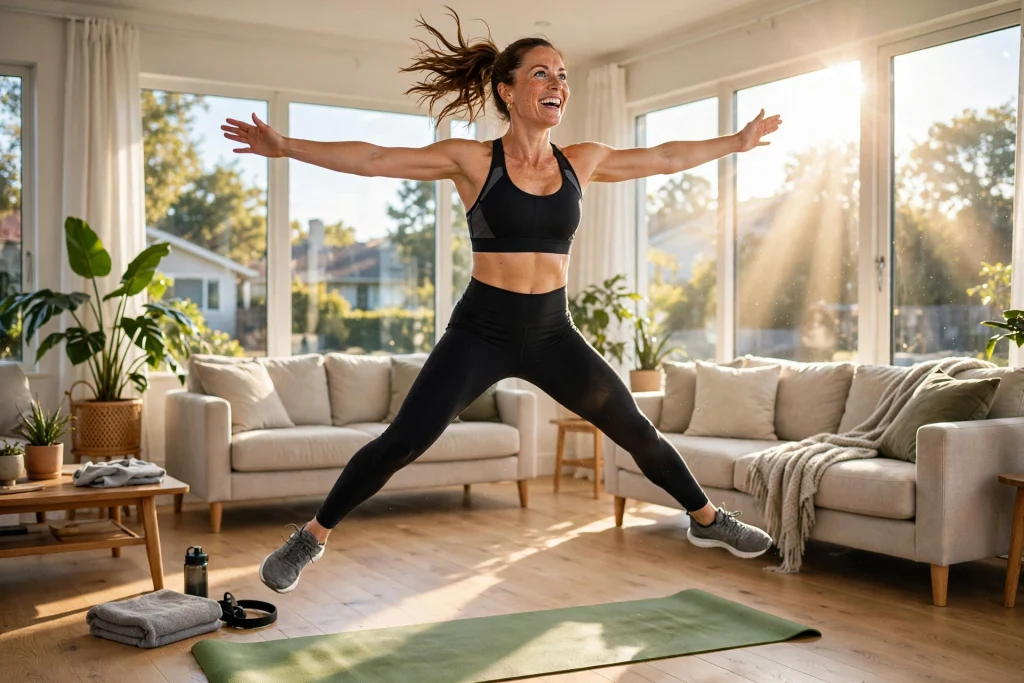
20-minute home workout no equipment
We will walk through a complete progression, starting with a gentle warm-up to prepare your muscles. You will then move into timed bodyweight circuits that challenge your endurance before finishing with a calming cooldown. Feel free to adjust the intensity to match your current fitness level while completing the full routine in just under half an hour.
Key Takeaways
- Learn how to exercise effectively without needing expensive gym gear.
- Discover a time-efficient routine that fits perfectly into a hectic schedule.
- Improve your daily energy levels through consistent bodyweight movements.
- Understand how to scale the intensity of your training to suit your needs.
- Master a simple progression from warm-up to recovery for better results.
Get Ready for a 20-Minute Home Workout No Equipment
A quick home workout can be the perfect reset button for your body and mind. By dedicating just twenty minutes to movement, you can effectively raise your core body temperature and improve blood circulation throughout your system.
What This Quick Home Workout Can Do for Your Energy
Engaging in an easy home workout routine provides a much-needed break from sedentary tasks. This short burst of activity helps clear mental fog and releases endorphins that naturally elevate your mood. You will likely notice a significant boost in your alertness and physical stamina shortly after finishing the session.
“Movement is a medicine for creating change in a person’s physical, emotional, and mental states.”
— Carol Welch
What to Check Before You Start
Before you begin, ensure you have enough open floor space to move freely without hitting furniture. Wear comfortable clothing that allows for a full range of motion and keep a bottle of water nearby to stay hydrated. Always perform a quick self-assessment regarding your current fatigue levels, balance, and any existing pain to ensure you are ready for exercise.
How to Modify the Routine for Your Fitness Level
It is important to listen to your body and adjust the intensity to match your current fitness level. You can easily scale this routine to ensure you remain challenged but safe throughout the entire twenty minutes.
Low-impact options for beginners
If you are just starting, focus on controlled movements rather than speed. You can replace jumping exercises with step-touches or march in place to keep your heart rate steady without excessive impact on your joints.
Ways to increase intensity safely
To increase the challenge, you can shorten your rest periods or add small, controlled pulses to your movements. Focus on maintaining proper form while increasing your speed to maximize the effectiveness of each repetition.
| Intensity Level | Movement Style | Rest Duration |
| Beginner | Steady and Controlled | 45 Seconds |
| Intermediate | Moderate Pace | 30 Seconds |
| Advanced | High Energy/Speed | 15 Seconds |
Build Heat With a Simple Full-Body Warm-Up
A proper warm-up is the foundation of every effective no equipment workout. By gradually increasing your activity level, you prepare your muscles and joints for the work ahead. This process helps you perform bodyweight exercises at home with better form and confidence.
March in Place to Raise Your Heart Rate
Start by marching in place to gently elevate your heart rate. Focus on lifting your knees comfortably while swinging your arms in rhythm. This simple movement signals to your body that it is time to transition from rest to activity.
Arm Circles and Shoulder Rolls for Upper-Body Mobility
Next, focus on your upper body by performing slow, controlled arm circles. Reach your arms out wide and rotate them in small, circular motions to loosen the shoulder joints. Follow this with gentle shoulder rolls to release any tension held in your neck and upper back.
Bodyweight Good Mornings to Wake Up the Hips
To prepare your posterior chain, practice the bodyweight good morning. Stand with your feet hip-width apart and place your hands behind your head. Hinge at your hips while keeping your back flat, feeling a light stretch in your hamstrings before returning to a standing position.
Alternating Reverse Lunges to Prepare the Legs
Incorporate alternating reverse lunges to build stability and lower-body control. Step one foot back and lower your knee toward the floor, keeping your front heel planted firmly. This movement is essential for mastering the balance required for an effective no equipment workout.
Breathing and posture cues during the warm-up
Maintaining proper form is just as important as the movement itself. Keep your chest lifted and your core engaged throughout these bodyweight exercises at home to protect your spine.
“Preparation is the key to success in any physical endeavor, ensuring your body is ready to perform at its best.”
Remember to breathe deeply and steadily during every repetition. Controlled breathing helps you stay focused and keeps your energy levels consistent as you prepare for the main circuit.
Complete the Main Bodyweight Workout at Home
The heart of your 20-minute home workout no equipment session begins with these five essential movements. By focusing on controlled form, you ensure that every repetition counts toward your fitness goals.
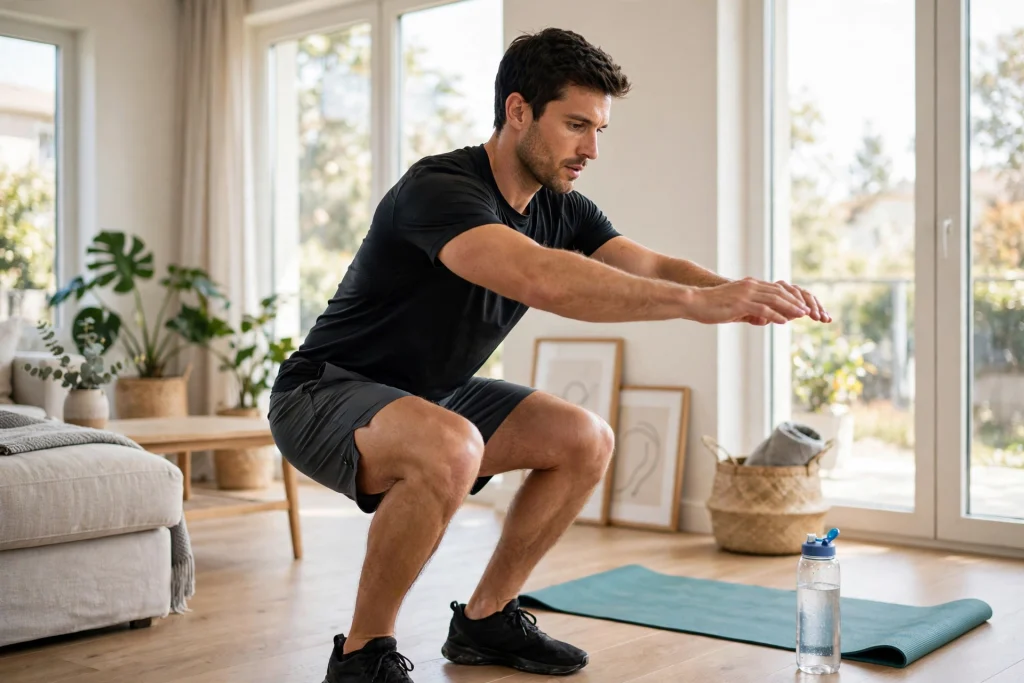
Perform Squats for Leg and Glute Strength
Squats are the foundation of lower-body power. They engage your quads, hamstrings, and glutes effectively.
How to maintain knee and foot alignment
Keep your feet shoulder-width apart with toes pointed slightly outward. As you lower your hips, ensure your knees track directly over your toes rather than caving inward. Keep your weight in your heels to protect your joints.
Use Incline or Standard Push-Ups for Upper-Body Strength
Push-ups build chest, shoulder, and tricep strength. They are a staple for any effective routine.
How to adjust push-ups against a wall or countertop
If a standard floor push-up feels too difficult, place your hands on a sturdy countertop or wall. This incline variation reduces the load while still challenging your upper body. Keep your core tight to maintain a straight line from head to heels.
Alternate Reverse Lunges to Challenge Balance and Lower-Body Control
Reverse lunges improve stability and coordination. They are often easier on the knees than forward lunges.
How to protect the front knee and keep the chest lifted
Step back and lower your back knee toward the floor, ensuring your front knee stays aligned with your ankle. Keep your chest lifted and shoulders back to maintain a neutral spine throughout the movement.
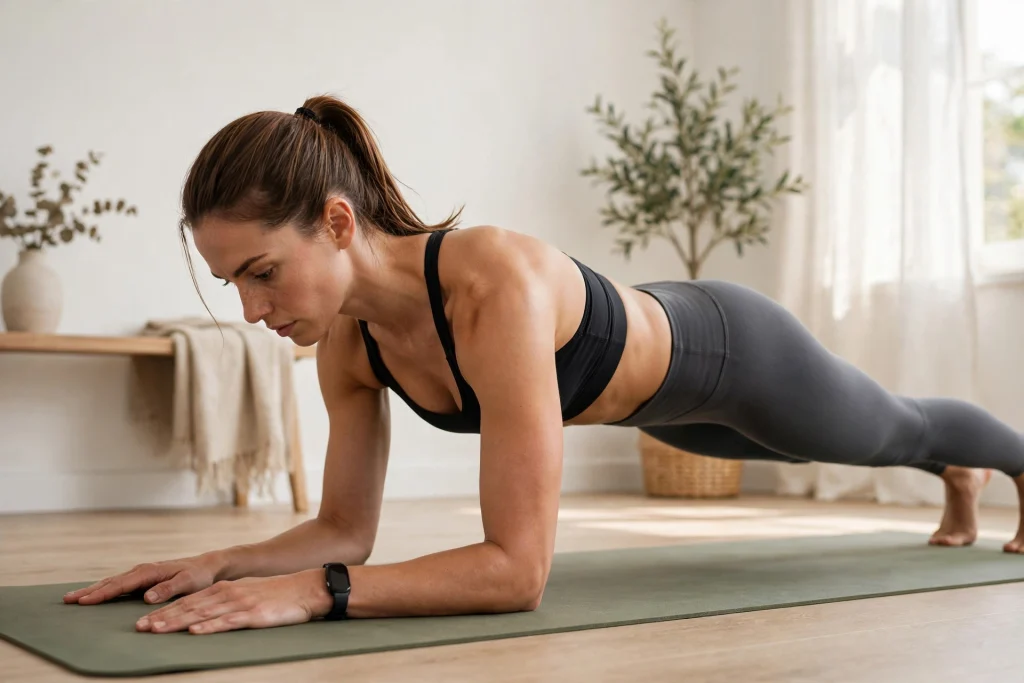
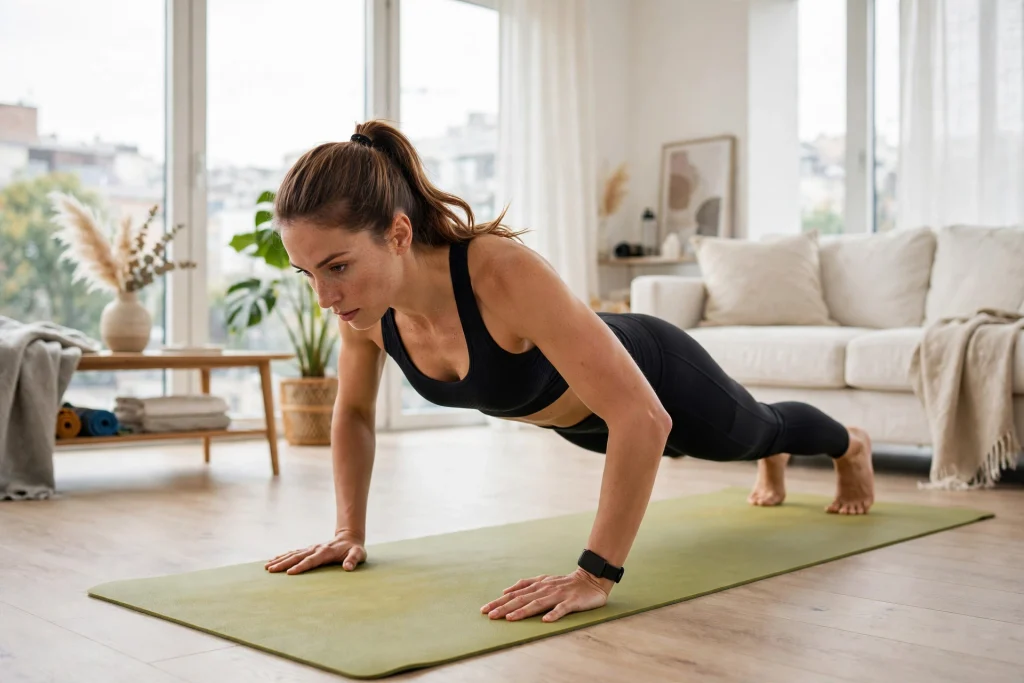
Hold a Plank to Engage the Core
A strong core supports your posture and overall movement. The plank is the ultimate isometric exercise for total body tension.
How to modify the plank from the knees
If holding a full plank is too taxing, simply drop to your knees while keeping your hips level. This modification allows you to maintain proper form without straining your lower back. Focus on squeezing your glutes to maximize the engagement.
Perform Mountain Climbers for a Burst of Cardio
Mountain climbers elevate your heart rate quickly. They add a dynamic element to your 20 minute no equipment workout.
How to choose a slower or faster pace
You can perform these at a slow, controlled pace to focus on core stability. Alternatively, increase the speed to turn this into a high-intensity cardio challenge.
Repeat the Circuit With Timed Work and Rest
Structuring your time helps you stay consistent. Use the following table to guide your effort levels during your 20 minute no equipment workout.
| Level | Work Interval | Rest Interval |
| Beginner | 30 Seconds | 30 Seconds |
| Intermediate | 40 Seconds | 20 Seconds |
| Advanced | 50 Seconds | 10 Seconds |
Suggested intervals for beginners
Start with a 1:1 work-to-rest ratio. This allows your heart rate to recover fully between sets.
Suggested intervals for a higher-energy workout
Reduce your rest time to 10 or 20 seconds to keep your heart rate elevated. This approach increases the intensity of your 20-minute home workout no equipment routine significantly.
Cool Down and Keep Your Energy Up After Exercise
Your body deserves a gentle return to a resting state after you finish your 20-minute home workout without weights. Taking a few minutes to wind down helps your system recover and prevents stiffness later in the day. This transition period is essential for long-term consistency and feeling your best.
Lower Your Heart Rate With Easy Movement
Once your final set is complete, avoid sitting down immediately. Instead, spend three to five minutes walking around your room or performing light, rhythmic movements. This gradual decrease in intensity allows your heart rate to return to normal safely.
Moving slowly helps circulate blood away from your muscles and back toward your heart. You will notice your breathing becoming steady as you move through this phase. It is the perfect time to check in with how your body feels after your 20-minute home workout without weights.
Stretch the Hip Flexors, Hamstrings, Chest, and Shoulders
After your heart rate settles, focus on static stretches to improve flexibility. Target your hip flexors, hamstrings, chest, and shoulders to release tension built up during the session. Remember to move into each stretch slowly and stop before you feel any sharp pain.
- Hip Flexors: Step into a shallow lunge and gently push your hips forward.
- Hamstrings: Keep a slight bend in your knees while reaching toward your toes.
- Chest and Shoulders: Clasp your hands behind your back and gently lift your arms.
Use Slow Breathing to Transition Out of the Workout
Deep, slow breathing is a powerful tool for your nervous system. Inhale deeply through your nose for four seconds, hold for two, and exhale slowly through your mouth for six seconds. This practice signals to your brain that the physical stress of the session is over.
Focusing on your breath helps you clear your mind and prepare for the rest of your day. You might find that this quiet moment is the most rewarding part of your routine. It allows you to appreciate the effort you just put into your health.
Rehydrate and Refuel After a 20-Minute No-Equipment Workout
Your body needs replenishment to recover effectively after exercise. Drink plenty of water to replace the fluids lost through sweat during your session. Pairing water with a small, balanced snack containing protein and carbohydrates will help repair your muscles.
| Recovery Goal | Action Item | Benefit |
| Hydration | Drink 8-16 oz of water | Restores fluid balance |
| Muscle Repair | Eat a protein-rich snack | Supports tissue recovery |
| Energy Levels | Consume complex carbs | Replenishes glycogen stores |
By following these simple steps, you ensure that your 20-minute home workout without weights leaves you feeling energized rather than drained. Consistency in your cooldown routine is the secret to staying active for the long haul.
Conclusion
Consistency remains the secret to lasting health. This 20-minute routine provides a complete package by blending a gentle warm-up, targeted strength movements, and effective cardio bursts. You finish with a cooldown that helps your body recover and reset.
You do not need a gym membership or expensive equipment to see results. This plan works for everyone from beginners to advanced athletes. Adjust the intensity by changing your pace or the number of repetitions to match your current fitness level.
Prioritize your form and breathing during every session. Proper technique keeps you safe while maximizing the benefits of each movement. Listen to your body and stay hydrated to maintain your energy throughout the day.
Find a small space in your home and start moving today. Small, frequent efforts lead to big changes in your strength and stamina. Share your progress with friends or track your improvements in a journal to stay motivated on your wellness journey.
FAQ
Is a 20minute home workout no equipment truly effective for building fitness?
Yes, it is! High-intensity bodyweight exercises at home can significantly improve your cardiovascular health and muscular endurance. By utilizing a 20 minute no equipment workout that focuses on compound movements like squats and planks, you can stimulate multiple muscle groups and boost your metabolic rate in a very short amount of time.
What do I need to prepare for this quick home workout?
You don’t need a gym membership or fancy gear. To begin this 20-minute home workout without weights, simply find a clear patch of floor space, put on some supportive shoes—like a pair of Brooks or Nike cross-trainers—and have a water bottle nearby. Using a stable surface like a KitchenAid countertop for modified push-ups can also be helpful for beginners.
Can I do this even if I haven’t exercised in a long time?
Absolutely. This is designed to be an easy home workout routine that anyone can start. You can modify the intensity by performing movements at a slower pace or using low-impact variations, such as stepping instead of jumping during mountain climbers. The priority is to move safely and listen to your body’s signals.
Why is this considered the best home workout for busy individuals?
Most people struggle to find an hour for the gym, but almost everyone can carve out 20 minutes. This effective no equipment workout eliminates travel time and equipment setup, making it easy to fit into a lunch break or a busy morning. Apps like Peloton or Nike Training Club often emphasize these short, powerful sessions because they are the most sustainable for a hectic lifestyle.
How often should I perform this 20-minute home workout no equipment?
For the best results, aim to complete this routine three to four times a week. Consistency is the key to seeing progress with any quick home workout. Always ensure you allow for recovery days or incorporate light activity like walking to keep your joints mobile and your energy levels high.
What should I do if I feel pain during the bodyweight exercises at home?
Safety is paramount. If you feel sharp pain rather than a typical muscle “burn,” stop the movement immediately. Check your alignment in a mirror or follow guided cues from reputable sources like the American Council on Exercise (ACE) to ensure your form is correct. You can always substitute an exercise for a gentler version to keep it an easy home workout routine while you build strength.
Is it necessary to warm up for such a short session?
Even for a 20 minute no equipment workout, a warm-up is essential. Taking three to five minutes to march in place and do arm circles prepares your joints and heart for the work ahead. This transition helps prevent injury and ensures you get the most out of every minute of your effective no equipment workout.